To unblock a downpipe, first find where the blockage is. Clear any leaves from the gully or shoe at the bottom, then run a hose up the pipe. If water still won’t pass, the blockage is usually at the top, in the gutter outlet or the swan neck bend, and needs clearing from above.
Where do downpipes usually block?
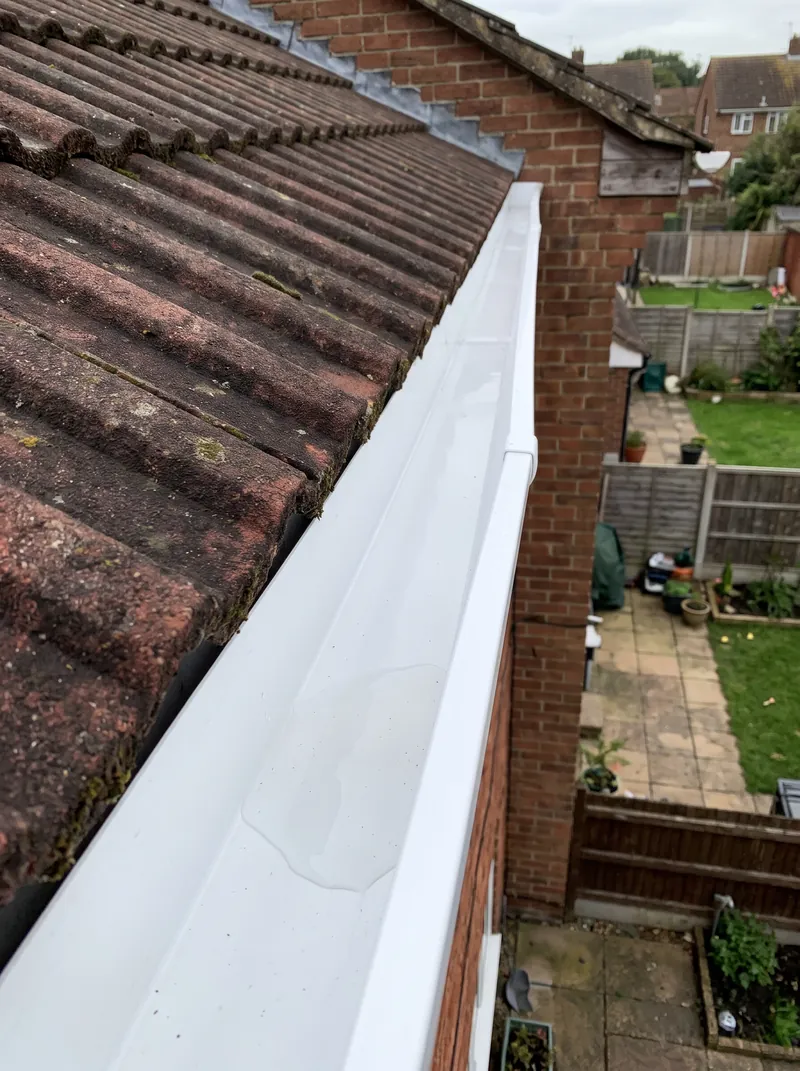
Most blockages are at the top. Leaves and moss wash along the gutter, gather at the outlet and wedge into the first bend. On most houses that’s a swan neck, two bends that take the pipe from the gutter, which sticks out from the wall, back to the wall. It’s the narrowest, twistiest part of the system.
The other common spot is the bottom, where the pipe meets the gully or the underground drain. Leaves and silt build up in the gully grate or shoe, and water backs up the pipe.
How can I tell where the blockage is?
- Gutter overflowing at the outlet, pipe dry: the outlet or swan neck is blocked.
- Water spilling from a joint halfway down: the pipe is blocked below that joint.
- Water backing up out of the gully at the bottom: the gully or the underground drain is blocked.
- Slow trickle and gurgling: a partial blockage somewhere in the pipe.
What can I safely try from the ground?
Start at the bottom, where it’s safe:
- Clear leaves and debris from the gully grate or the shoe at the base of the pipe.
- If the pipe ends in an open shoe above a gully, check that the gully itself drains.
- Feed a garden hose as far up the pipe as it will go and turn it on. Sometimes that shifts a loose blockage in the lower bends.
- Tap along the pipe. A solid blockage often sounds dull compared with the hollow sound of an empty pipe.
If the pipe has a removable access cap or a rodding point, you can open it and clear the section below.
What should I avoid?
- Don’t force rods hard into plastic pipe. Downpipe joints are push-fit and can come apart.
- Don’t pour drain chemicals down. They rarely shift leaves and moss, and they end up in the drain or soakaway.
- Don’t lean a ladder on the gutter to reach the top. It can crack plastic gutters and isn’t stable.
- Don’t pull the pipe apart unless you know how to refit it. Downpipe sections need clipping back properly.
How do you clear a downpipe from the top?
From the top, the job is to clear the outlet and swan neck. Professionals use a vacuum on long poles to lift the plug of leaves and silt sitting in the outlet, then run water down the pipe to see if it flows. If the blockage is deeper in the bends, rods or water pressure work it loose.
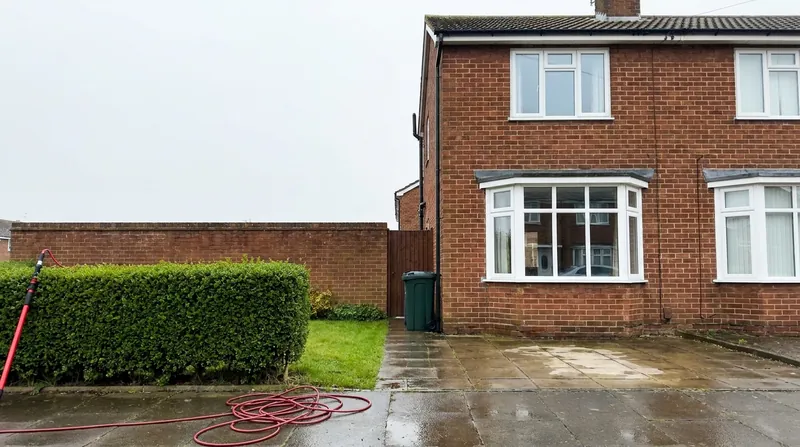
We do this from the ground, and use the camera to see into the outlet. Then we test with water until it runs freely from gutter to gully. Downpipe unblocking explains the process.
What if the blockage is in the underground drain?
If water reaches the bottom of the downpipe but backs up there, the problem is below ground, in the drain or soakaway. That needs a drainage company with drain rods or a jetter. We can tell you whether the pipe is clear down to the ground, so you know who to call.
Why does my downpipe keep blocking?
Because the gutter keeps feeding it. Every leaf, clump of moss and bit of grit that washes along the gutter ends up at the outlet. If the gutters aren’t cleaned, the pipe will block again. Trees overhanging the roof make it happen faster, and so does a mossy roof.
A wire balloon guard in the top of the outlet can stop big leaves, but it catches moss and silt and blocks too. If you have one, it needs clearing at every gutter clean. Are gutter guards worth it?
Is a blocked downpipe urgent?
It’s not an emergency, but it shouldn’t be left all winter. A blocked downpipe sends all the water from that section of roof over the gutter, onto one patch of wall. That’s a common cause of damp inside, and of mortar washing out of the brickwork. Water pooling at the base of the wall is bad for the damp-proof course too.
Should I clean the gutters at the same time?
Yes. Clearing the downpipe without clearing the gutter is like clearing a sink plug and leaving the food in the sink. We clear both on the same visit and test them together. Gutter cleaning includes testing the outlets and downpipes with water.
How do I keep downpipes clear?
Have the gutters cleaned once a year, or twice if you have trees nearby. Keep the gully grates at the bottom clear of leaves in autumn. Trim branches that hang over the roof. Check the pipes run freely after the first big autumn storm.
What about the swan neck itself?
On most modern plastic systems the swan neck is made of two offset bends and a short length of pipe, all push-fit. Leaves and moss lodge at the lower bend. We clear it from above with suction and water, and only take it apart if there’s no other way, refitting it the way it came off. If it’s cracked or the joints have come apart, we’ll show you so a fitter can replace it.